Thursday, December 4, 2008

Final Copy of My Paper!

Becoming and Retaining the “Queen”:
the unique perspective of dreams in the Alice texts
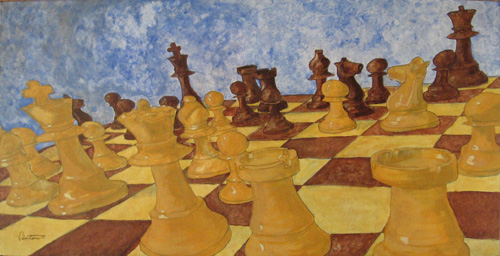


Dreams open an immense portal of imagination and fantasy in the human mind. The subject of dream has fascinated human discussion and been pursued by both academic intellectuals and creative artists in a wide variety of mediums that attempt to “portray” dream and “understand” its functions. However, a problem surrounding the discussion of dreams is that too often they are “recollected” and not transcribed or presented as if the dream was presently occurring. Sigmund Freud states how “we very often have an impression that we have dreamt a great deal all through the night and have forgotten most of what we dreamt. On this view, the dream which we remember when we wake up would only be a fragmentary remnant of the total dream-work: and this, if we could recollect it in its entirety, might well be as extensive as the dream-thoughts” (Freud, Sigmund. “The Dream-Work”). Lewis Carroll’s Alice in Wonderland and Through the Looking Glass, perhaps two of the most memorable dream-based texts , display the dreams of Alice in this rare form. The understanding of the dreams of Alice as being “entire” provides the reader a rare opportunity to view the dream from this perspective.
One of the key characteristics of this “entire” dream is how it is framed in the present. Instead of being in the more common form of dream “recollection” which is past-based, the dreams of Alice are laid out for the reader in a linear fashion; this gives the reader the ability to experience the dream along with Alice. In the recollected dream, which is the way we often think of dreams, the listener is passive; the listener does not attach the story to himself or herself. However, in the present-based dreams of Alice, the observer of the dream has an active role. This allows the reader to view the dream as an experience that they’re involved with rather than the retelling of a story to them. By becoming involved in the story the person is able to have a sense of “ownership” of the story. The story becomes engrained as part of the “self”. This “ownership” of dreams is a similar to the idea with which people attach history, religion, and other myths to themselves.
The similarity in all of these is the way in which people cast themselves and their interests into the stories. Often times, an observer of history or religion will note that this is the history of his/her people, or that by understanding the certain dictates of a religion they will live a better life. The observers of these types of myths will contend that they play a role in the formation of their future life whether it is through the understanding of history or religion. Yet, the notion of “my dream”, the acknowledgment of attachment, does not seem to be as prevalent in the mind of contemporary humanity as these other similar sorts of myths; the dream seems to have been demoted to a realm of “fantasy”, with a conception that the dream was not a part of them, but rather something imposed upon them. This view of an experience of a dream leads the dreamer to categorize it as being “untrue” due to its fantastical nature. With this view of the dream as “untrue” the dreamer also becomes persuaded that the dream is useless and cannot be used to help them understand their “future self” in the same way that other myths like history or religion can.
In the chapter “Advice from a Caterpillar”, Alice finds herself in a conversation with the philosophical hookah-smoking caterpillar. The caterpillar asks Alice “who are you?” to which she replies “I know who I was when I got up this morning, but I think I must have been changed several times since then” (Carroll). Alice is acknowledging that she has changed since her departure from her normal world and her arrival in Wonderland. Although she states that she knew the state of her “self” in the morning, she now understands that she has changed, but appears at a loss of an exact answer to who she is—the loss of understanding of “self”. One of the reasons for this loss of understanding of the “self” could be because of her adventures thus far, which had shaped her “self” but without her having noticed. Upon further reflection, she would discover that the events in Wonderland had changed her and that she was becoming an entirely different person altogether.
The loss of “self” seems to be countered by an aspect of learning. By looking at Through the Looking Glass, it seems that much didactic value is to be found in the realm of dreams. Alice reveals her desire to move forward on the chessboard when she states how much she wishes that she “was one of them! I wouldn’t mind being a Pawn, if only I might join—though of course I should like to be a Queen, at best” (Carroll). Not only does this seem to be hinting at becoming a Queen, but also it actually portrays Alice as desiring to become a Queen; she has set a goal for herself to attain and only through the process of working towards that goal can she find it reachable.
In a game of chess, the Pawn can only move forward and has a goal of trying to reach the end of the board and gain the status of a Queen. The idea of moving across the board suggests that this process is reminiscent of the learning process. By becoming the Queen, the former Pawn is then able to move back and forth across the board with ease. The Queen then, with her ability to navigate the board fully, could be seen to represent the application of knowledge. The only reason the Queen can move anywhere on the board is the Queen, while under the status of Pawn, has been there before. As learners, we can only successfully apply knowledge that we had learned of prior to its application. By moving across each square, the Pawn has gained “experience” in the journey of moving from one end of the board to the other. By moving across each square, Alice seems to be learning, for her movement is not aimless—it is directed forward, in a “progressive” manner that will lead her closer to the status of Queen. This progressive nature of movement suggests that the shift from Pawn to Queen does not only occur on the move from square 7 to square 8 but that the shift occurs during the movement over all the squares; the movement from square 1 all the way to square 7 is just as important as the final move. By “being closer” at square 4 than at square 3 can be understood to mean that the Pawn is different on square 4 than on square 3. As each move “gets closer” to Queen status the Pawn becomes more “Queen-like”.
The didacticism of dreams seems to be common to the theory of monomyth, which argues that all human journey consists of the three parts: Separation, Initiation, and Return. These three parts of journey are easily identified in the Alice texts. Separation occurs when Alice falls down the rabbit hole and when she enters the looking glass. When she goes through these “portals” she is removed from her world and placed into a new one that is unfamiliar to her, meaning new possibilities. Initiation occurs upon her exploration of the new world. Return occurs when Alice awakes from her dream, thus leaving the world to which she was transported, and returning to the one she left in the first place. The purpose of the journey is to learn. Upon Separation, the adventurer is removed from their world and placed into a new world, open to new possibilities for learning; the portals lead not only to a new physical world, but a new educational world as well. Initiation occurs in the immersion of the adventurer in that world. Having entered this new educational world, the adventurer will be able to go through many different “experiences” that come along with being immersed in a foreign place. Upon Return, the person who has undergone Separation and Initiation will be able to use the “experience” gained during those stages to apply it in future actions and decisions that come with the Return.
Is her journey really different than the one that we make each night? We subject to Separation when we fall asleep, Initiation while we dream, and Return when we wake. What then is our objective? Our task seems to become the Queen (during Initiation) and retain our ability to move freely across the board (upon Return). We are to do this by becoming active dreamers— by being able to recall dreams in their entirety and understand them in relation to our lives, not only through the lenses of past and present, but also of future. Perhaps this task is too difficult. Perhaps one may say it is an unattainable goal. But why is this so? We have seen it done with the Alice texts. Alice dreams become “real” and “true” through the daydreams of Lewis Carroll. If Lewis Carroll, who is not so unlike us, can dream actively then why would we view this as something unattainable? . It could be that we need to act more like the song and row our boats gently down the stream—with great care, caution, and attention. Lewis Carroll knows that life is dream-like. He concludes Through the Looking Glass with the line “Life, what is it but a dream?” (Carroll). Why do we not understand this? How often have we sung “life is but a dream” to ourselves and to others without questioning those infamous lines of wisdom? When we are able to view our dreams from a “present” perspective and understand our dreams as an active experience, we will be like Eve eating of the tree of knowledge, like Lyra with the Aliethiometer who remembers what was forgotten, and like the child who has just discovered the letter “A”.
T.S. Eliot writes in the last of the Four Quartets that “we shall not cease from exploration, and at the end of all our exploring we will be able to arrive at the place we left and know it for the first time” (Eliot). In the morning, during our waking, we should view the world with the new perspective allowed to us by the new outlook of our dreams. We should view waking as the return from a long journey in which our minds were illuminated by the new sights, feelings, and experiences gained during the course of our journey. Like what Dorothy discovers in Oz, the only way for her to understand “there’s no place like home” was to leave Kansas and go to the dream-like land. Likewise, a necessary way to discover what our lives are made of is to fall asleep and dream and discover what our dreams are made of.


Works Cited

Carroll, Lewis. Alice in Wonderland. Ann Arbor: Borders Group, Inc. 2007
Eliot, T.S. Four Quartets. New York: Harcourt, Brace & World, Inc. pg. 39.
Freud, Sigmund. “Creative Writers and Daydreaming.” The Critical Tradition. 3rd ed.
Boston: Bedford/St. Martins, 2007
Freud, Sigmund. “The Dream-Work.” The Critical Tradition. 3rd ed. Boston: Bedford/St.
Martins, 2007

Sunday, November 9, 2008

Blog 11/9


Reminders--

*Test Wednesday

*11/10 have questions for test


*My revised paper topic*

I'm going to look more closely at the relationship between dreams and mobility. In "Through the Looking Glass" one of the more important themes seems to be the relationship between how we move through the dream. Note the significance of the chess pieces. Alice begins as a pawn which, chess players will know, that can only move forward one square at a time except the first move in which the chess player
can move two. What is so interesting about the pawn though is that upon reaching the "end" it becomes a queen and is able to move . This is why the queen characters in the story could run so fast compared to Alice. They have this freedom of mobility to move from one end to another either in a linear or diagonal fashion. The question of Separation, Initiation, and Return also seems useful to this study. Could I view leaving the first square as Separation? The passing through the board as initiation? And finally the transformation into a omni-directional mobile queen as return? The use of separation, initiation, and return could even be looked at more broadly as falling asleep (separation), dreaming (initiation), and waking back up (return). This view of the process as cyclic seems to lend itself to the thought that to make an end is to make a new beginning. Could the mobility found in dreams contribute to the formation of our identity?
I plan to note a couple instances from the Alice texts (don't forget the drifting down the river part), "Row Row Row, Your Boat", a few quotes on the subject of dream, and perhaps some other cool things! It should be an interesting pursuit for sure.

Wednesday, November 5, 2008

Favorite Chapter in "Alice Books"


It's really hard to choose my favorite chapter from these wonderful texts. Honestly, I really don't think I had a "favorite" one because what I found to be my favorite was the continuation of the story by more and more nonsensical and fantastic events filled with great characters. However, the chapter on Humpty Dumpty was pretty funny. I loved his lines like "When I use a word... it means just what I choose it to mean-- neither more nor less." The other line I really found to be great was when he said "I can explain all the poems that were ever invented-- and a good many that haven't been invented just yet." Being an English major and spending a great deal of time attempting to make meaning of various texts . In fact, the whole character of Humpty Dumpty sort of seems to be a slap in the face for all of the critics in the world who have the "I'm right, you're wrong" attitude. Also, the character of Humpty Dumpty seems to reveal some sort of relationship between portrayal of self and . In this fantasy world, Humpty Dumpty claims to essentially hold the key to knowing all and being able to create meaning from all of it's various "texts". In the post-modern view of the world in which all "things" are "texts" that are open for "reading", Humpty Dumpty would be lord of all knowledge because of his ability to explain everything ever invented.
The character of Humpty Dumpty reminds me of two guys I worked with this summer. One would always ask a nonsense question like "How many tires fit on the shovel handle in the middle of a rainstorm?" The other guy would always stop what he was doing and provide some answer like "the answer is one-half times the number of pop cans that are in a library covered in red sheets underneath the house of Frodo when looked at in the month of June." Of course the guy who asked the question would always go "that's exactly right!" It really frustrated me for a while because I had no idea what they were trying to get at. After a while I began to participate in creating the questions and providing answers and found it quite enjoyable. When I gave up trying to "find the answer"is when I really "understood" what was going on. What I learned from these guys is that the point of the question was not to arrive at some logical answer, but instead to exercise the imagination and who could come up with the most interesting nonsense answer. I was transformed from Alice, who was concerned with the logic of the whole matter, into someone who found pleasure in ignoring the "rules" of logic and embracing the nonsensical.


Definition for "nonsense"
1. words or language having little or no sense or meaning.
2. conduct, action, etc., that is senseless, foolish, or absurd: to have tolerated enough nonsense.
3. impudent, insubordinate, or otherwise objectionable behavior: He doesn't have to take that nonsense from you.
4. something absurd or fatuous: the utter nonsense of such a suggestion.
5. anything of trifling importance or of little or no use.

*Obviously the dictionary people have no tolerance of fun.


Definitions for "nothing"
1. no thing; not anything; naught: to say nothing.
2. no part, share, or trace (usually fol. by of): The house showed nothing of its former magnificence.
*My favorite 3. something that is nonexistent.
4. nonexistence; nothingness: The sound faded to nothing.
5. something or someone of no importance or significance: Money is nothing when you're without health.
6. a trivial action, matter, circumstance, thing, or remark: to exchange a few nothings when being introduced


Some funny poems I found at http://www.funny-poems.co.uk/kids/humorous-poetry/q07-bud.asp

What Do You Want Bud?

I saw a Buddhist monk today
At a hot dog stand
The cook stood at the griddle
Doing his thing
“What can I make you” was his
Gruff demand
The monk replied, “Make me one
With everything”.


Macho Pursuits

Sliding, slipping, gliding, tripping
If ice skating's too exhilarating
Try cake icing, it's quite exciting
Slapping, slopping, frosted topping.


Is This Art?

Martin Creed or Damien Hirst
Collins, Gormley which one's worst
A pickled sheep in formaldehyde
A light goes on and off inside
The truth about salt and paper crumpled
Painting by numbers and things untitled
A pile of bricks, an unmade bed
Is this art or is art dead?

Tuesday, November 4, 2008

Dark Side of The Rainbow


We talked slightly about listening to the "Dark Side of the Moon" Album by Pink Floyd while watching the Wizard of Oz. This phenomenon has garnered so much attention that it has been dubbed by some as "Dark Side of the Rainbow". Although, at times the coincidence is astounding, the notion that Pink Floyd composed this album to match up with the Wizard of Oz is ridiculous. However, as wikipedia states (so it must be true), fans of the phenomenon have accrued over 100 instances in which there appears to be a synchronization of the two texts. On wikipedia also the phenomenon is stated as a cultural reference point with many references made to the effect. The fact that it does seem to "fit" at times is fairly interesting however. The power of coincidence in our world is astounding and often overlooked. The website also claims that Pink Floyd's later album "The Wall" syncs up with the Disney version of "Alice in Wonderland". This leaves us with one question... what do these people do with their lives?


http://www.blogger.com/img/blank.gif

Monday, November 3, 2008

Voting!


Although by the time anyone reads this the election will be over here is my political remark on the election. Personally, I don't believe that the president of the United States is going to fix all the "problems" that plague the U.S. What bothers me most about John McCain is his perception of himself as a "Maverick". What the United States does not need right now is a candidate who claims to be able to "fix" all of America's problems. To me, Barack Obama seems to embody the principles of collaboration-- the remedy to the issues confronting America today. We don't need a "maverick" who will lead the blind, we need a candidate willing to inspire people into creating a better America through cooperation and collaboration.

Wednesday, October 29, 2008

Musing about term paper topic...

I believe that in this class we have asserted that 'play' of children isn't completely physical and it isn't completely contained in texts. We have taken . The aspect of child's games that are especially intriguing to me is the notion that these games have a didactic value to them. A child 'playing' in one of these games often merges the physical with the 'textual'. Is the state of being a child the beginnings of the time in which children as people are beginning to understand the ongoing "human narrative"? Since children's lit. reveals the archetypes of humanity more clearly than more 'adult' texts, are children better masters of 'knowing' these archetypes? I guess, the topic that I'm musing around is the notion of the concept of 'play' being a combination of 'physical' and 'textual' elements. It's almost as if children playing are like the theater without the 'adult' notion that what they are doing is performing something that is not 'real'. This brings in the idea of children seeing the world in metaphors and not in similes. They are not acting "like" a character in another reality, they "are" a character in another reality.

Please tell me if I am off-base Dr. Sexson, although I believe I am getting closer and closer to a topic for our 3-100 page paper.

Notes on class 10/29

Announcements--

*Wear Costume Friday get some needed E.C.!

*Term papers-- Start considering topics, will be given in Z-A order, length between 3-100 pages.


Terminology

*Synecdoche-- a figure of speech in which a part is used for the whole or the whole for a part.


Quotes

*It takes a great deal of history to produce a little literature.-- Henry James

*We shall not cease from exploration, and the end of all our exploring will be to arrive where we started and know the place for the first time.-- T.S. Eliot


Parallels and Connections between various texts

*Ending of Snow White where the Queen has to put on the red-hot iron shoes and dance to her death reminded me of a song by the band Clap Your Hands Say Yeah! called "Satan Said Dance". The lyrics are as follows


"Satan said dance

He says to me to shake around
And don't stop 'til you hit the ground

And I know it is not how you thought it would be
No whips no chains just dancing dancing dancing dancing
dancing dancing dancing dancing dancing dancing dancing
dancing dancing dancing dancing"

*This may be kind of a stretch but the concept of dancing as torture is the kind of image that doesn't really come about too often and is pretty memorable when it does. This idea of dance as torture is pretty intriguing really. It evokes images of Sisyphus, condemned to do a task, but rather than suffer for eternity as the song suggests, the fate of the queen is an eventual ceasing of her dancing but only after she dies. Torture in fairy tales seems to provide an interesting perspective into the views of "justice" and "morality" that seem to be a main focus on these tales.